
Learn more about deepin on DistroWatch: https://distrowatch.com/table.php?distribution=deepin
Recently, the 2026 Qualcomm & Radxa AI Developer Day was successfully held in Shenzhen. Under the theme “AI Advancing Together, Open Source Reborn,” the event attracted attention from numerous embedded developers, hardware and software ecosystem partners, and open-source community enthusiasts.
As a leading open-source operating system community in China, deepin attended the conference with its latest porting achievements and set up a dedicated experience booth. On site, deepin highlighted the recent adaptation progress of the deepin 25 operating system on Qualcomm-based development boards newly released by Radxa, including the Dragon Q8B and Dragon Q6A, presenting attendees with new possibilities for a domestic desktop OS on multi-architecture, high-performance hardware.
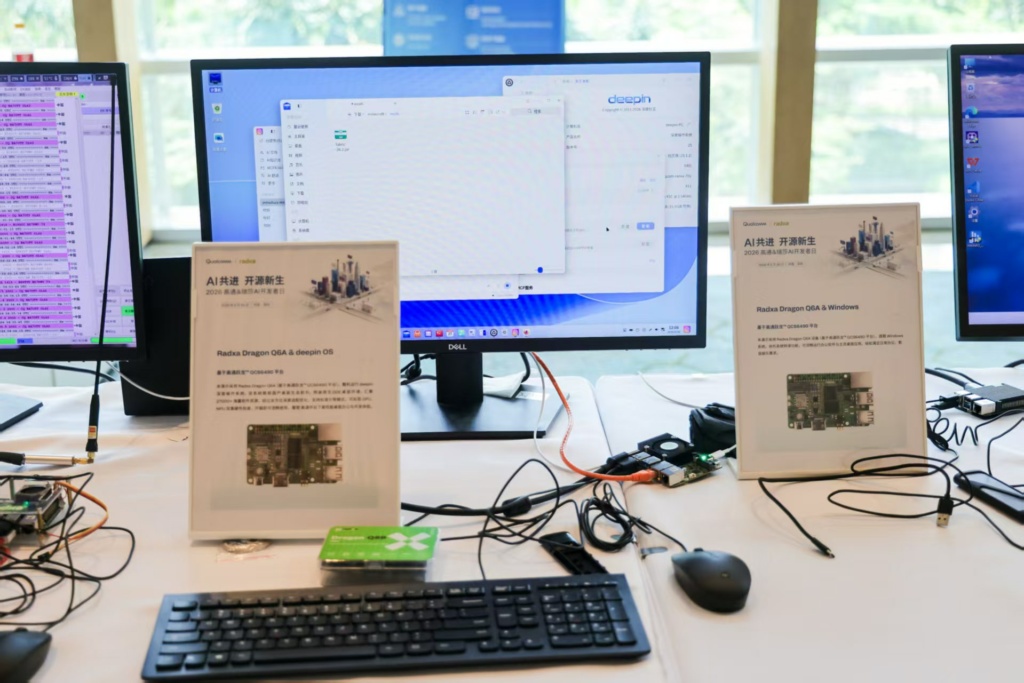
Behind the Rapid Porting: The Power of Mainlining and Standardization
One of the most eye-catching exhibits at the event was deepin’s adaptation for Radxa’s brand-new flagship board, the Dragon Q8B (3rd Gen Snapdragon 8cx).
It is worth noting that the deepin-ports SIG completed the system boot and preliminary adaptation of deepin 25.1 for the Dragon Q8B in just one afternoon. This efficient porting speed is attributed to Qualcomm’s substantial investment in upstreaming to the Linux community in recent years, as well as the widespread adoption of standard UEFI boot support:
-
Qualcomm, Radxa, and the open-source community continuously merge platform drivers and core code into the mainline Linux kernel. This allows OS distributions to support brand-new hardware without cumbersome patch porting, greatly reducing the difficulty of system adaptation.
-
The adapted development boards use a standard UEFI boot process, enabling ARM architecture devices to load the system through generic bootloaders (such as GRUB) just like traditional x86 PCs, eliminating the complex process of individually debugging each ARM board in the past.
Thanks to this platform-level standardization, the deepin-ports SIG was able to rapidly bring the elegant and user-friendly DDE desktop environment to the new platform, significantly shortening the development cycle for “getting a new chip up and running.”
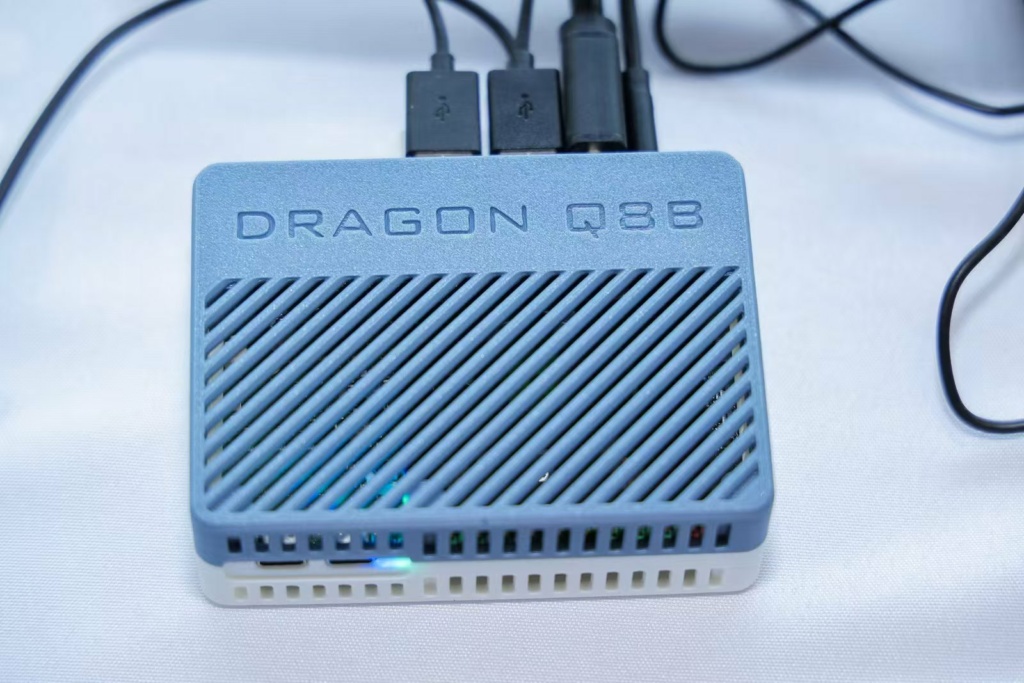
Radxa Dragon Q8B
Full Support for the Radxa Qualcomm Lineup: A Single Image, Seamless Hot-Swap
For developers, fragmentation of system images across multiple devices often incurs additional maintenance costs. To address this pain point, deepin employs a decoupled image solution — a unified system image that supports all Qualcomm-based Radxa devices.
At the exhibition booth, the deepin team vividly demonstrated this feature to the audience:
A demonstrator pulled a system disk written with the deepin 25 image from a Dragon Q6A board and directly inserted it into a Dragon Q8B board next to it. Without reflashing or modifying any kernel configuration, the Dragon Q8B booted up smoothly and entered the DDE desktop environment.
This not only validated deepin’s highly decoupled architectural design for multi-architecture support but also provided developers with great convenience when debugging and migrating across multiple devices.
- Dragon Q8B: https://radxa.com/products/dragon/q8b
Image Download: https://deepin-community.github.io/sig-deepin-ports/images/arm64
Real-World Hardware-Software Synergy: On-Device UOS AI and Smooth Gaming
Leveraging the powerful hardware computing capabilities of the Qualcomm Dragon series boards and the deep optimizations of the deepin system, a series of live demos at the booth attracted many developers to stop by.
1. Local On-Device AI: UOS AI
The deepin 25 deeply integrated AI assistant, UOS AI, was demonstrated on site. With the excellent computing power of the Dragon series boards, “Xiao U” can handle intelligent features such as natural language interaction quite smoothly locally, showcasing the potential of running large models and intelligent assistants at the edge.
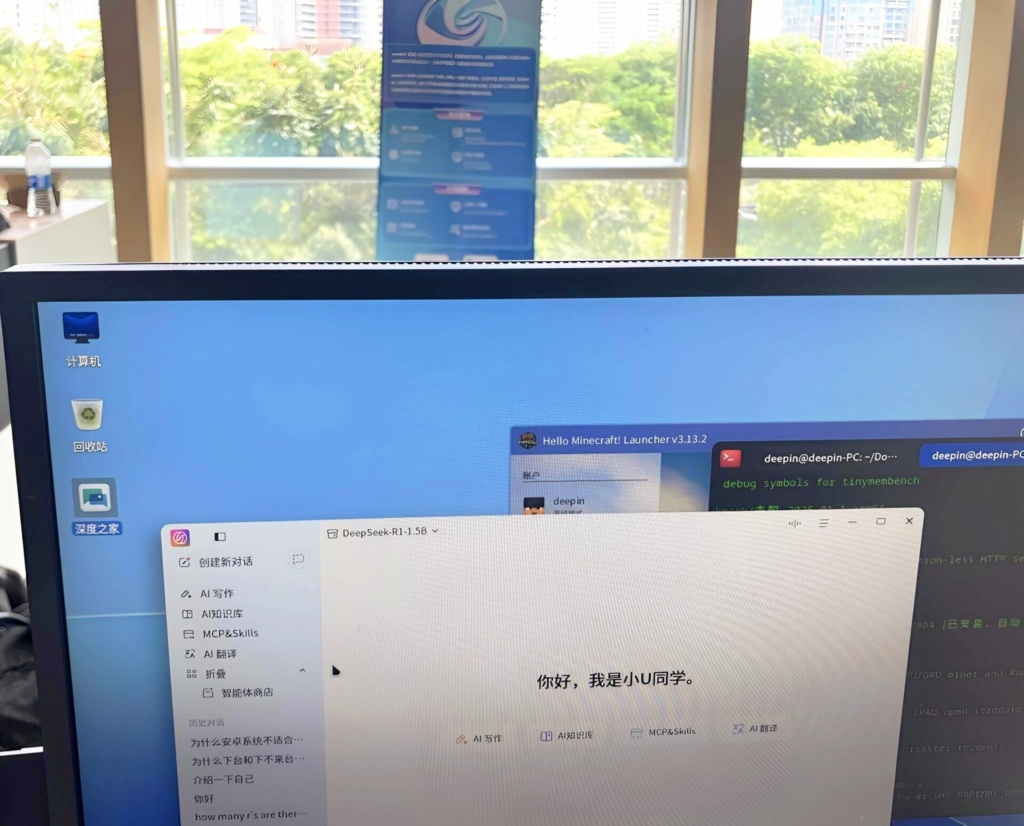
DDE & UOS AI
2. Graphics Rendering: Smooth Minecraft Gameplay Test
To evaluate the graphics driver efficiency of the Qualcomm Adreno GPU under deepin, the booth also showcased a live demo of the classic game Minecraft using Vulkan/OpenGL.
Thanks to the excellent support of the open-source Mesa driver for Qualcomm GPUs, the game runs remarkably smoothly on deepin 25, with stable rendering and outstanding graphics acceleration performance — more than capable of handling daily multimedia entertainment and light 3D rendering needs.
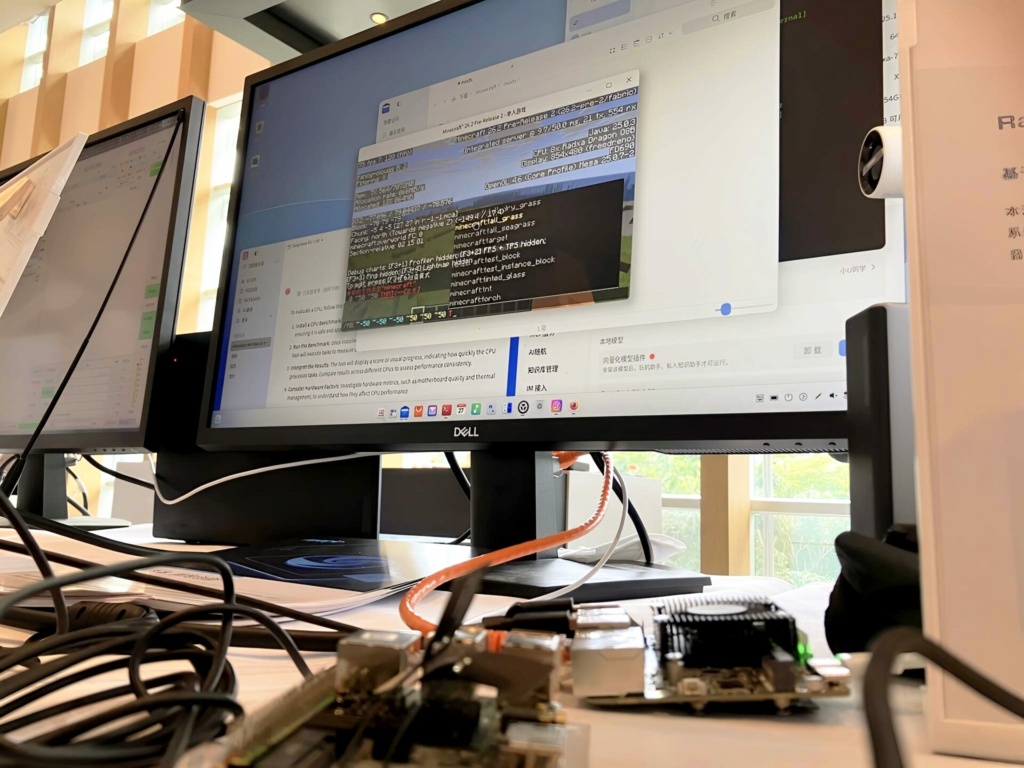
Dragon Q8B & Minecraft
Currently, the deepin-ports SIG has officially added the Radxa Qualcomm Dragon series devices to its long-term porting and maintenance list. Going forward, the community will continue to follow up on NPU computing power utilization, GPU driver optimization, and compatibility with specific peripherals for the Qualcomm platform, providing long-term system updates and security patches.
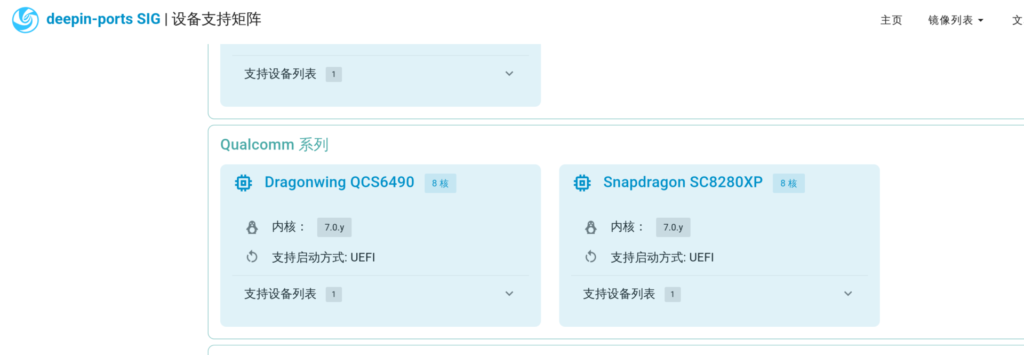
https://deepin-community.github.io/sig-deepin-ports/matrix/arm64
As an open-source operating system with a prominent ranking on DistroWatch and widely recognized by global users, deepin is working closely with hardware and chip manufacturers such as Qualcomm and Radxa. Through these collaborations, deepin is extending a unified and user-friendly desktop experience to more cutting-edge ARM hardware platforms, bridging the entire chain from underlying chips and the operating system to on-device applications, and delivering more robust “hardware-software synergy” solutions for diverse scenarios.
If you are also interested in hardware and software adaptation, feel free to visit the deepin forum to connect with us: https://deepin-community.github.io/sig-deepin-ports/matrix/arm64
Learn more about deepin on DistroWatch: https://distrowatch.com/table.php?distribution=deepin